
Advanced ATP Betting Markets: 2026 ROI & Strategy Catalog
 Available in US

Most tennis bettors never move beyond simple moneyline wagers. They pick who they think will win, place their bet, and hope for the best. That approach works fine if you’re betting casually, but it leaves massive amounts of value on the table.
The real edge in ATP betting comes from understanding the full spectrum of available markets. Each betting type rewards different skills, suits different match situations, and offers unique opportunities to find mispriced lines. I’ve spent years exploring these markets, and what I’ve learned is this: the more exotic the market, the less efficient the pricing tends to be.
This guide walks through every major ATP betting market beyond basic match winners. We’ll cover how each market works, when it offers value, and most importantly, how to identify situations where bookmakers have mispriced the line. Some of these markets are genuinely complex, but that complexity is exactly why sharp bettors can still find edges.
Set Betting & Games: 2026 Payout Efficiency by Market
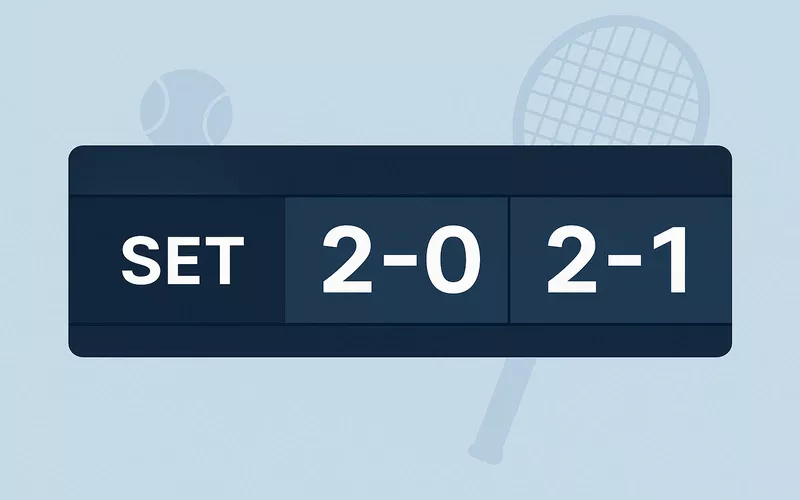
Set betting means predicting the exact final score in sets. You’re not just picking who wins you’re calling whether it’ll be 2-0, 2-1, or in the underdog’s case, 1-2 or 0-2. The payouts are higher because you need to be more precise, but the strategic depth here is remarkable.
The key insight with set betting is that match dynamics differ enormously between straight-set victories and three-set battles. Some players are absolute killers when they get ahead they smell blood and close matches quickly. Others play conservatively with a lead and often let opponents back into matches. Understanding these tendencies is where profit lives.
Consider a player like Daniil Medvedev. When he’s on his game and wins the first set, he historically closes matches in straight sets at an unusually high rate. His grinding style and mental toughness make comebacks against him rare. If you’ve watched enough of his matches, you know that 2-0 scorelines appear more frequently than bookmakers price them. That’s exploitable value.
Conversely, certain players consistently end up in three-set matches even when they’re favored. Sometimes it’s because their game style invites variance big servers who lose their rhythm after winning a first set. Other times it’s mental fragility players who can’t maintain intensity across multiple sets. When betting favorites in these situations, the 2-1 line often offers better value than 2-0.
Surface matters enormously for set betting. Clay courts produce more three-set matches because the slower surface reduces the advantage of big serves and allows more baseline grinding. If you’re betting a clay court match and the favorite is a solid but unspectacular player facing a decent opponent, the 2-1 line is usually more realistic than 2-0, even if the favorite is heavily backed.
First set specialists present interesting set betting opportunities. Some players come out absolutely firing in the first set they’re fresh, mentally sharp, and physically at their peak. But after winning that first set, intensity drops. They’re satisfied with the lead and sometimes cruise in the second set, which opens the door for opponents to level the match. Betting these matches to go three sets can offer tremendous value if you’ve identified the pattern.
One pattern I’ve exploited repeatedly is the “comfortable lead letdown.” When a favorite wins the first set easily 6-2 or 6-1 they often relax in the second set. The underdog, having nothing to lose, starts playing more freely. This frequently results in the underdog taking the second set before the favorite regroups for the third. Markets often assume easy first sets lead to 2-0 victories, but the actual data shows three-set matches occur more than pricing suggests.
Tournament fatigue impacts set betting significantly. Late in tournaments, when players have already played several matches in consecutive days, three-set marathons become less likely. Players simply lack the physical reserves for extended battles. In finals and semifinals, 2-0 results happen more frequently than earlier rounds, yet bookmakers don’t always adjust set betting lines aggressively enough to reflect this.
Game Totals and Handicaps
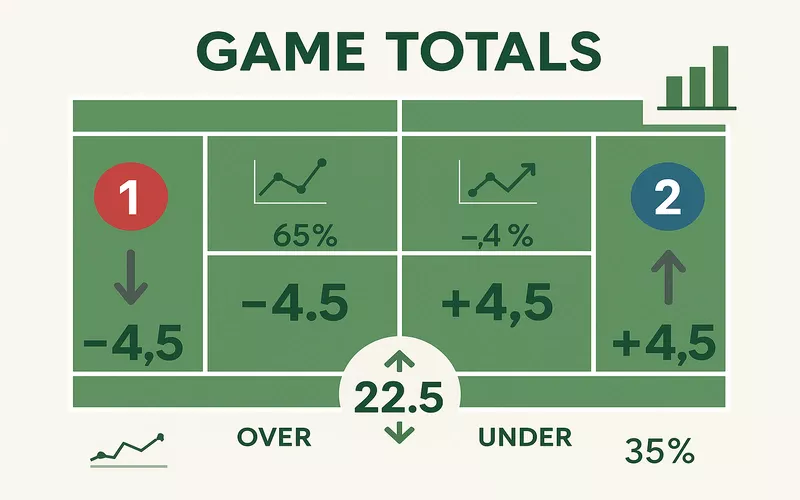
Game totals ask you to predict whether the total number of games played will be over or under a specified number. If a match ends 6-4, 6-4, that’s 20 total games. If it goes 7-6, 4-6, 6-3, that’s 26 games. This market rewards understanding match pace and playing styles rather than just picking winners.
The beautiful thing about game totals is they’re relatively uncorrelated with match outcome. You can predict an underdog will lose but still correctly bet over on total games if you expect a competitive match. This creates situations where your match analysis points one direction but your game total analysis points another and both can be correct.
Playing style matchups are everything in game totals betting. When two big servers face each other, sets often go to tiebreaks, which inflates game totals. A match ending 7-6, 7-6 contains 26 games despite being a straight-set victory. Meanwhile, when a dominant returner faces an average server, sets might end 6-2, 6-3 for only 17 games total. The winner is almost irrelevant to the game total what matters is the style clash.
I’ve found consistent value betting overs in matches between players with strong serves on fast surfaces. Indoor hard courts especially produce tiebreak-heavy matches where neither player can consistently break serve. Bookmakers set totals based on average matches, but serve-dominant matchups on fast surfaces consistently exceed those averages.
Weather conditions affect game totals in ways most bettors ignore. Wind disrupts serving consistency, leading to more breaks of serve and often more total games. Heat exhausts players, which can lead to either shorter points and quicker games, or physical breakdowns that extend matches. Cold weather tightens tennis balls, reducing their bounce and favoring servers, which typically means higher game totals. Factor these conditions into your game total predictions.
Game handicaps work similarly to point spreads in other sports. You’re betting one player will win by more than a certain number of games, or conversely that an underdog will lose by fewer than that number. A handicap of -4.5 games means the favorite needs to win by at least 5 games total across the entire match.
The value in game handicaps comes from identifying situations where the market has correctly priced the match winner but incorrectly priced the margin. A player might be a deserved favorite, but the handicap assumes they’ll dominate when the matchup actually suggests a competitive contest. Or the reverse the handicap might be too conservative for a matchup where the favorite has severe stylistic advantages.
Surface transitions create game handicap opportunities. When players move from clay to grass, some adapt immediately while others struggle for weeks. A player who’s been mediocre on clay might be severely undervalued on grass if that’s historically their best surface. The match winner line might adjust slightly, but game handicaps often lag behind, creating value on the suddenly motivated player who’s back on their preferred surface.
Alternative handicaps, offered by some bookmakers, let you adjust the line in exchange for different odds. If the main handicap is -3.5 games but you think the favorite will win more decisively, you might find value in taking -5.5 at longer odds. These alternative lines are less heavily bet and thus less efficient, creating opportunities for sharp handicappers.
Prop Bet Opportunities
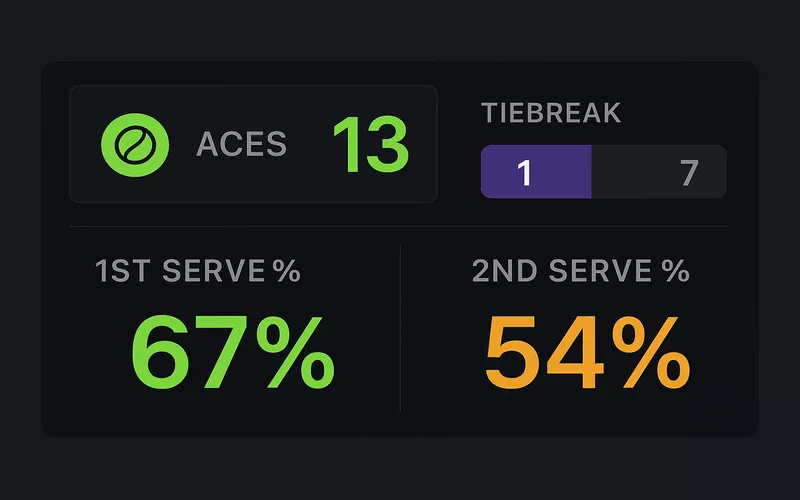
Prop bets focus on specific match events rather than the overall outcome. Will there be a tiebreak? How many aces will the server hit? Will both players hold serve in the first set? These markets offer value because they’re less efficient than main markets fewer people bet them, and bookmakers spend less time setting sharp lines.
Ace totals are my favorite prop market because they’re highly predictable yet consistently mispriced. A player’s ace rate on a given surface is remarkably consistent over time. If someone averages 12 aces per match on grass, they’ll hit close to that number in most grass matches. Yet bookmakers often set ace totals based on recent overall form rather than surface-specific data.
The key to profitable ace betting is maintaining your own database of player ace rates by surface and tournament speed. Not all hard courts play the same Indian Wells is notably slower than Cincinnati. When a big server moves from a slow hard court tournament to a fast one, their ace total might not adjust enough to reflect the court speed change. That’s where value appears.
Opponent quality matters for ace props too. A massive server facing an elite returner will hit fewer aces than when facing a poor returner, even if both opponents are similar in ranking. Bookmakers tend to set ace totals based on the server’s average, but smart bettors adjust for the specific opponent’s return statistics.
Double fault props work inversely. Players under pressure or dealing with serving issues hit more double faults. Second serves become more tentative, and double faults cluster. When you’ve identified a player struggling with their serve maybe coming off an injury, or having recently changed their serving motion double fault overs become profitable.
Break point conversion props reward deep match analysis. Some players are clutch on break points, converting at rates well above average. Others consistently choke their break point conversion percentage might be 35% when the tour average is 42%. When these players face each other, the break point markets often fail to account for these specific tendencies.
The “will there be a tiebreak” prop is deceptively complex. Tiebreaks happen when sets reach 6-6, which requires both players to hold serve repeatedly. On slow surfaces with good returners, tiebreaks are rare. On fast surfaces with big servers, tiebreaks are common. Yet bookmakers sometimes set these props based on general probabilities rather than the specific surface and player combination.
I’ve found value consistently betting tiebreak “yes” in matches between serve-dominant players on fast surfaces, even when odds suggest it’s close to a coin flip. The actual probability in these specific circumstances is much higher than general tiebreak frequency across all matches.
First blood props betting which player will win the first game offer tiny edges that accumulate over time. Players receiving serve first have a slight statistical disadvantage in winning the opening game, but not as much as odds typically suggest. The player serving first in a match wins that first game about 70-75% of the time depending on surface, yet odds often price it closer to 80-85%. That gap represents consistent value.
Tournament Winner Markets
Outright tournament betting means picking who’ll win the entire event before it starts. The payouts can be enormous backing a player at 20-1 who goes on to win the tournament is how recreational bettors dream of winning big. But making these bets profitably requires thinking several rounds ahead.
The fundamental challenge with tournament outrights is that you need everything to break right. Your player needs to win five, six, or seven consecutive matches depending on tournament size. One bad day, one injury, one inspired opponent, and your bet is dead. This variance is why I’m generally conservative with tournament outrights compared to match betting.
However, certain situations offer genuine outright value. The most common is when a player is coming into form at exactly the right time. Tennis form is streaky players get hot, their confidence builds, and they ride momentum through entire tournaments. If you can identify a player entering that hot streak before the market fully recognizes it, tournament outrights become profitable.
Surface specialists at their preferred tournaments are another consistent source of outright value. When a clay court specialist arrives at a smaller clay tournament, they’re often undervalued relative to their chances. The market tends to overweight current ranking and recent results across all surfaces, but a true clay court specialist might have a much higher win probability specifically on clay than their overall ranking suggests.
Draw positioning matters enormously for outrights. When the draw is released, before the tournament starts, analyze who your player would face in each round assuming favorites advance. Sometimes a dangerous floater a high-quality player with a low seed due to injury or recent struggles lands in a section of the draw where they’ll face weak opponents early. If you’ve done your homework and identify this before the market fully adjusts, there’s value.
I also look for situations where the top favorites have potential traps in their early rounds. If the number one seed drew a nightmare matchup in round two maybe a player who’s beaten them before or whose style counters theirs that seed’s tournament odds might be too short. Meanwhile, players in the other half of the draw face easier paths and become relatively undervalued.
Weather and scheduling can affect tournament outrights in ways the market doesn’t immediately price. If a tournament forecast shows heavy rain likely, scheduling chaos becomes probable. This favors players with deep squads of support staff and experience handling disrupted schedules, while disadvantaging players who rely on strict routines.
Quarter and Section Betting
Some bookmakers offer betting on tournament sections or quarters of the draw. Instead of picking the tournament winner, you’re betting which player will emerge from their section to reach the semifinals or finals. This reduces variance since you only need your player to win three or four matches instead of the entire tournament.
Section betting offers better value than outrights in certain situations. When you’ve identified that one quarter of the draw is significantly weaker than the others maybe due to injuries, surprising early withdrawals, or just unfortunate seeding the players in that weak quarter become undervalued on a section basis even if their outright odds are fair.
I particularly like section betting in Masters 1000 events where top seeds get first-round byes. The bye means they’re fresher for their first match while other players are already battle-tested. But it also means they might be rusty. If you’ve identified a dangerous non-seeded player who matches up well stylistically against that top seed’s section, betting that player to emerge from the section can offer tremendous value.
The key is focusing on the specific matchups within that section rather than just the overall quality of players. A section might contain three top-20 players, but if they have overlapping styles or bad head-to-head records against a specific player in that section, that player becomes more valuable than their odds suggest.
Each-Way Betting Value
Each-way betting, borrowed from horse racing, means your bet pays out if your player wins OR reaches a certain stage of the tournament. Typically, bookmakers offer quarter odds for reaching the final or semifinals, depending on tournament size. This reduces variance significantly compared to straight outrights.
The value in each-way betting comes from situations where you think a player can go deep but isn’t the absolute favorite to win. Maybe you’ve identified someone peaking at the right time, with a favorable draw, playing at a tournament that suits their game. You’re not confident they’ll win the whole thing, but you’re confident they’ll reach at least the semifinals. Each-way betting captures that middle-ground conviction.
Tournament size affects each-way value significantly. At Grand Slams with 128-player draws, reaching the finals is genuinely difficult even for top players. The each-way payout (usually one-quarter of outright odds for reaching the final) might not offer sufficient value. But at ATP 250s with 28 or 32-player draws, where your player needs to win only three or four matches to reach the final, each-way bets become more attractive.
I’ve found consistent value taking each-way positions on players ranked 15-30 at tournaments where the top seeds withdrew late or are clearly unmotivated. These players suddenly face much easier paths to reaching finals, but their outright odds might not have adjusted enough. The each-way portion pays out even if they lose the final, which becomes much more probable when they don’t have to beat three top-10 players to get there.
Hedging Opportunities
Hedging means placing additional bets during a tournament to guarantee profit or minimize loss regardless of how your original bet resolves. This is particularly powerful with tournament outrights and futures markets.
Let’s say you backed a player at 25-1 to win a tournament before it started. That player makes the final, and their opponent in the final is priced at 2-1. You could bet on the opponent at 2-1, and now you profit regardless of who wins the final. The math requires careful calculation to maximize guaranteed profit, but these situations arise regularly.
The key to profitable hedging is recognizing when to hedge versus letting your original bet ride. If your original outright pick has a genuine advantage in the final and is now underpriced as the favorite, hedging might lock in profit but sacrifice the bigger payout. But if your player has overperformed their skill level to reach the final and faces a superior opponent, hedging makes perfect sense.
Live betting creates constant hedging opportunities. If you backed a player pre-match and they take the first set, you can hedge by backing their opponent at longer odds in-play. Depending on the odds movement, you might guarantee a profit on both sides. This requires quick thinking and access to in-play markets, but it’s how professional bettors manage risk in real time.
Experienced traders often use live ATP betting mastery techniques to hedge their positions during high-volatility Grand Slam matches.
Tournament progression hedging is more complex but potentially more profitable. As your outright pick advances through rounds, their odds to win the tournament shorten. After they win their quarterfinal, you could back another player in the opposite half of the draw. If both reach the final, you’re hedged. If your original pick loses the semifinal but your hedge wins their semifinal, you still profit from the hedge.
Combination and System Bets
Parlays, also called accumulators, combine multiple match bets into one wager requiring all selections to win. The payouts multiply, creating huge potential returns from small stakes. But the flip side is one wrong pick kills the entire bet.
I’m generally cautious with parlays because tennis has enough variance that stringing together multiple correct picks is harder than casual bettors realize. However, certain parlay situations offer value. When you’ve identified multiple matches on the same day where favorites are underpriced maybe due to market overreaction to recent upsets parlaying those favorites captures compounded value.
The key is correlation. Don’t parlay matches where the outcome of one affects the other. And be realistic about the variance. A three-match parlay needs all three to hit, which even with 70% confidence on each individual match, only gives you about 34% chance of the parlay winning. You’re not getting 34-1 odds on that parlay you’re getting around 5-1 or 6-1. The math doesn’t always work in your favor.
Round robin bets create multiple smaller parlays from a larger group of selections. If you pick four matches, a round robin creates six two-match parlays, four three-match parlays, and one four-match parlay. This reduces variance compared to a straight four-match parlay because you can still profit even if one selection loses.
I use round robins when I have multiple strong convictions in one tournament day but want downside protection. The cost is higher because you’re placing multiple bets, but the reduced variance is worth it when you’re confident in most but not all of your selections.
System bets, common in European bookmakers, let you specify how many selections must win. A “3 of 5” system means you pick five matches but only need three to win for a payout. The odds are lower than a five-match parlay requiring all five, but the probability of winning is much higher.
The value in system bets comes from situations where you have strong convictions on several matches but acknowledge the reality of variance. Maybe you’ve identified six favorable matchups in a tournament day, but you’re realistic that one or two might not go your way due to randomness. A “4 of 6” or “5 of 6” system captures most of your edge while providing cushion for variance.
Risk Distribution Methods
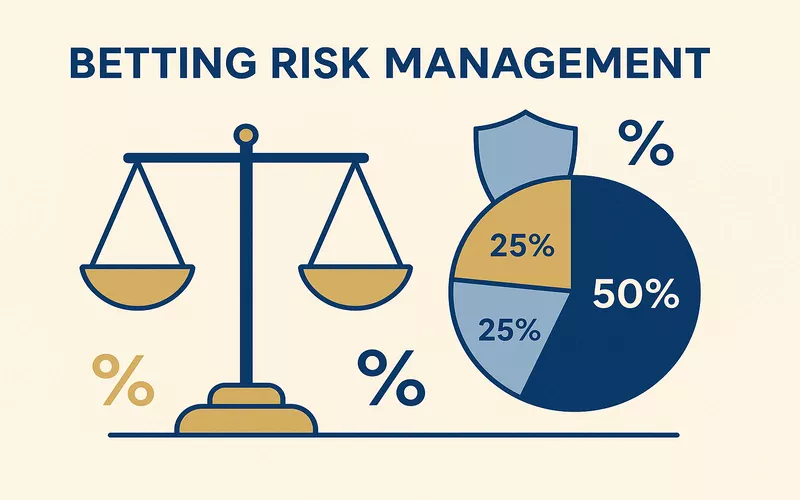
Regardless of which markets you’re betting, intelligent risk distribution is essential for long-term profitability. The ATP tour provides endless betting opportunities, and the temptation to bet too much too often is real.
Bankroll allocation across markets requires discipline. I generally allocate more of my bankroll to match betting and game handicaps where I have the most edge, and smaller amounts to prop bets and tournament outrights where variance is higher. This isn’t a rigid formula if I identify an unusually strong opportunity in a typically high-variance market, I’ll bet it. But the default position is betting more on lower-variance markets.
Tournament-specific allocation matters too. I bet more aggressively at Grand Slams and Masters 1000 events where I have the most data and clearest edges. At smaller ATP 250s, especially ones in unusual locations with unfamiliar courts and conditions, I bet more conservatively because my edge is smaller.
Time-based distribution prevents chasing. After a losing day, the temptation to bet more the next day to win it back is powerful but destructive. I have hard rules about maximum daily betting volume regardless of results. Some days I’ll find ten strong opportunities and bet them all. Other days I’ll find zero and bet nothing. Discipline about not forcing action is what separates long-term winners from losers.
The advanced markets in ATP betting offer tremendous value for those willing to do the analytical work. Each market requires different skills and rewards different approaches. The complexity is exactly why inefficiencies persist most bettors never venture beyond simple match winners, leaving value in these markets for those of us willing to dig deeper.
Understanding when a three-set scoreline is more likely than straight sets, recognizing how playing styles affect game totals, identifying ace total mispricings, finding outright value before markets adjust these skills develop through experience and careful record keeping. Start with the markets that make most sense for your analytical strengths, track your results meticulously, and gradually expand into new markets as you identify edges. That’s how you build a profitable, sustainable approach to advanced ATP betting markets.
Check out our top site for tennis betting to find the most competitive margins for advanced markets.
