
Live ATP Betting 2026: Real-Time Momentum & Data Tool
 Available in US

Live betting transforms tennis from a pre-match analytical exercise into real-time warfare. You’re no longer just predicting outcomes before the first serve you’re reading momentum shifts, identifying fatigue, spotting tactical adjustments, and capitalizing on market overreactions as matches unfold. The possibilities are intoxicating, but the execution is brutal.
I’ve watched thousands of matches with money riding on in-play decisions, and here’s what I’ve learned: live betting rewards a completely different skill set than pre-match betting. Pre-match analysis is methodical, data-driven, and patient. Live betting demands quick pattern recognition, emotional control under pressure, and the ability to act decisively with incomplete information. Most bettors who excel at one struggle with the other.
The edge in live tennis betting comes from three sources. First, you can observe what’s actually happening rather than predicting what might happen. Second, betting markets overreact to recent events, creating exploitable mispricings. Third, most live bettors are recreational players making emotional decisions, which keeps markets inefficient longer than pre-match markets. If you can stay analytical while chaos unfolds around you, profit follows.
This guide breaks down everything required to bet tennis matches profitably in real time. We’ll cover the preparation work that happens before the first ball is struck, the patterns to watch during play, the psychological traps that destroy even experienced bettors, and the technical execution that separates winning live bettors from the rest.
Live In-Play Analysis: 2026 Momentum Indicators
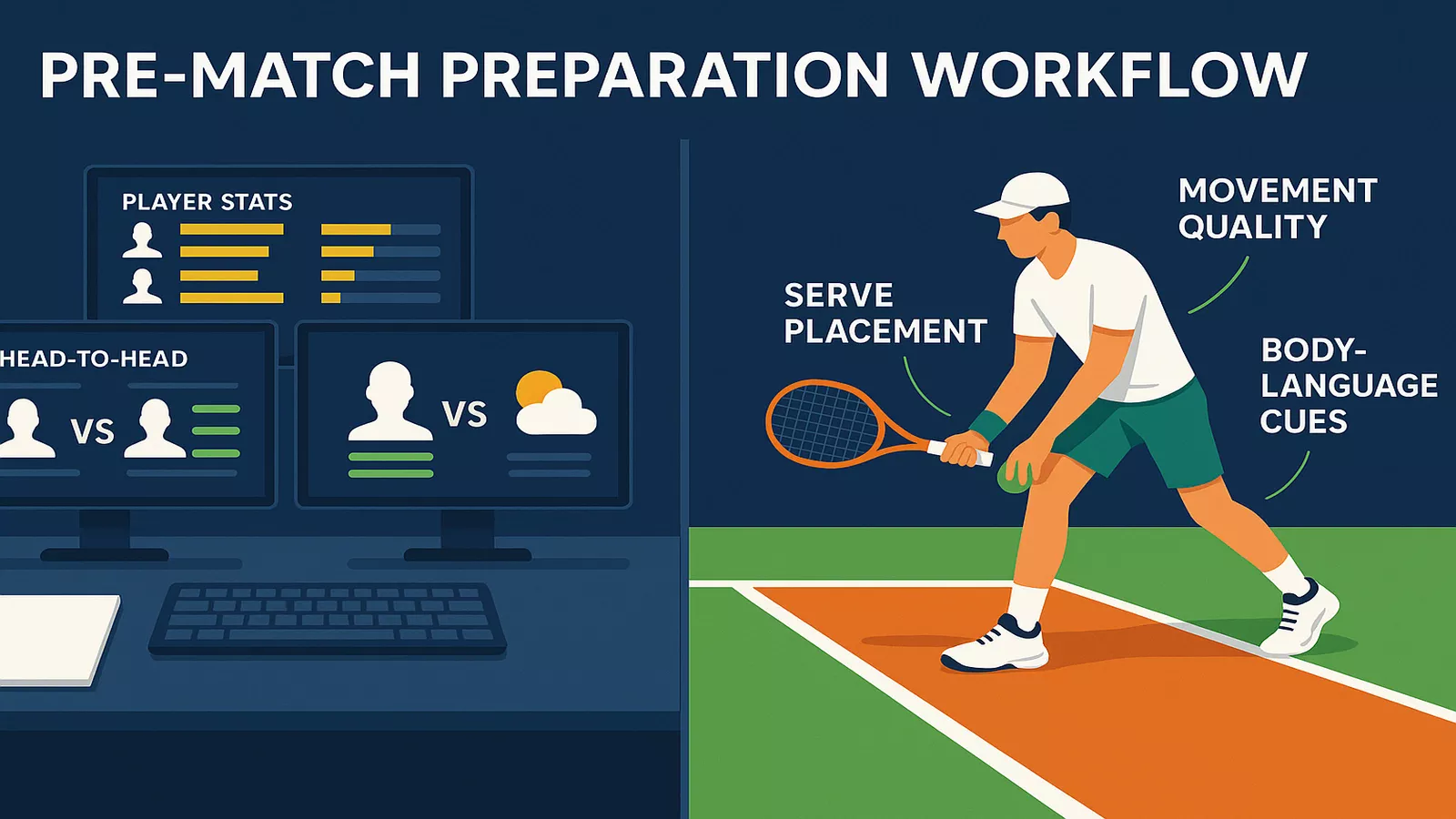
Successful live betting begins hours before the match starts. The bettors making money in-play aren’t winging it they’ve done extensive homework that allows them to recognize opportunities instantly when they appear.
The first step is understanding both players’ tendencies in granular detail. How do they typically respond after losing their serve? Some players immediately refocus and break back. Others spiral mentally and lose concentration for several games. When you’ve seen a player’s pattern repeat across dozens of matches, you can predict their response in real time and bet accordingly before markets adjust.
I maintain profiles on players I regularly bet live, documenting their mental patterns. Does this player elevate their game when trailing? Do they become conservative with leads? How do they handle pressure points at 30-30 or deuce? These tendencies don’t change match to match they’re ingrained patterns that create predictable betting opportunities.
Head-to-head history between opponents matters more for live betting than pre-match betting. Before the match, knowing Player A leads the head-to-head 5-2 is mildly useful. During the match, when Player A loses the first set but historically always recovers against this specific opponent, that information becomes actionable. Maybe Player A figures out Player B’s patterns as matches progress. Maybe Player B consistently runs out of gas in third sets against Player A. These historical patterns help you bet correctly when live odds overreact to short-term developments.
Physical condition assessment starts before the first point. Watch warm-ups whenever possible. Is a player moving fluidly or favoring a body part? Are their serves hitting practice targets or spraying inconsistently? Professional bettors gain edges by observing warm-ups while recreational bettors ignore them. That information predicts how matches develop before betting markets incorporate it.
Recent match history provides crucial context. A player coming off a three-hour quarterfinal yesterday faces different physical challenges than a player who cruised through in 75 minutes. When the three-hour player shows fatigue in set two, you’ll recognize it immediately because you expected potential physical issues. Meanwhile, markets might assume they’re just playing poorly, creating value on their opponent.
Weather and court conditions require advance assessment. Wind forecasts, temperature trends, humidity levels these factors affect different players differently. Big servers struggle in wind. Baseline grinders thrive in heat that exhausts opponents. When conditions match what you predicted, you can bet confidently knowing you have information edge over bettors who ignored environmental factors.
I check weather forecasts the morning of matches and note which players are advantaged or disadvantaged by conditions. When in-play odds fail to fully account for how conditions are affecting the match, betting opportunities emerge. Markets price players based on general form and ranking, but conditions create specific advantages that sharp live bettors exploit.
Reading Match Flow and Momentum Indicators
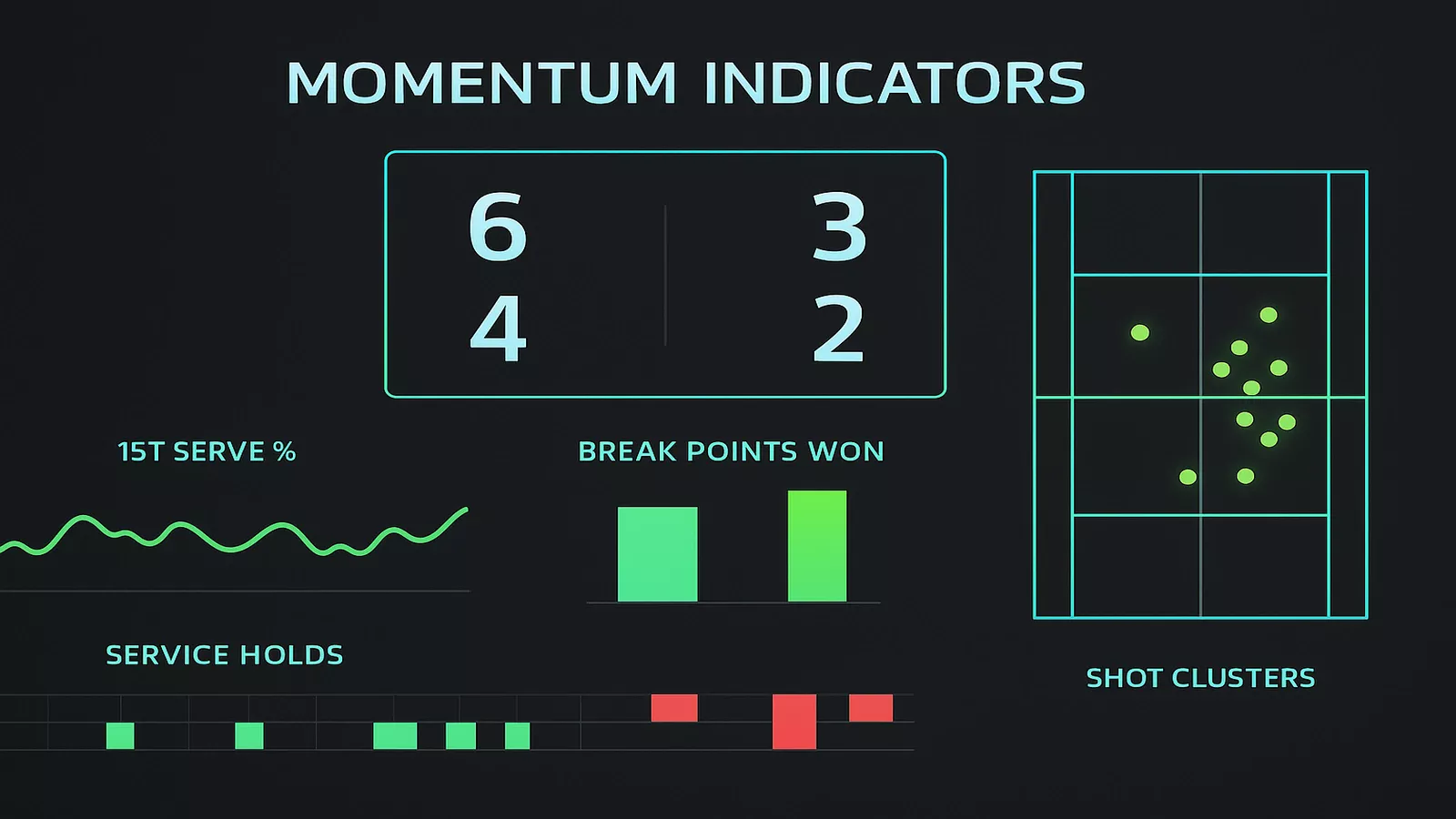
Tennis momentum is real but misunderstood. It’s not some mystical force it’s the accumulation of small confidence shifts, tactical adjustments, and physical changes that compound into decisive advantages. Learning to identify momentum early, before it fully manifests in the score, is the core skill of profitable live betting.
Service hold patterns tell you more than the actual score. When a player who was comfortably holding serve suddenly faces multiple break points or needs deuce to hold, something changed. Maybe their first serve percentage dropped. Maybe their opponent adjusted tactics and is attacking second serves more aggressively. The score might still show an even set, but the underlying dynamics shifted. Betting on that shift before the break actually happens captures value.
I watch for sequences where a player holds serve easily for four straight games, then suddenly struggles to hold the fifth. That struggle indicates momentum shifting even if they win that game. The next service game will likely be even tougher, and a break becomes probable. Markets often lag behind these subtle shifts, creating betting opportunities for those recognizing the pattern early.
First serve percentage is the single most important live statistic. When a player’s first serve percentage drops from 70% to 50%, everything gets harder. They’re hitting more second serves, giving opponents better looks, playing more defensive points, and expending more energy. This decline predicts future struggle before the scoreboard reflects it.
Most live bettors focus on the current score and recent game outcomes. Sharp bettors monitor first serve percentages and recognize that a player holding serve at 45% first serves is living dangerously. They’ll get broken soon. Betting on that break before it happens, while odds still favor the server, captures value that disappears once the break occurs.
Break point conversion reveals mental state. A player who’s converted 1 of 7 break point chances is struggling with pressure execution, even if they’re competing well otherwise. As the match progresses, this pattern typically continues or worsens. When that player creates more break chances, you can confidently bet against their conversion because they’ve shown an established pattern.
Conversely, a player saving 6 of 7 break points demonstrates mental toughness under pressure. Even if they’re being outplayed generally, they’ll be difficult to break. This information helps you avoid betting on seeming momentum that won’t produce actual breaks.
Body language provides genuine insight despite seeming subjective. Players experiencing physical issues show telltale signs reduced movement between points, longer recovery times, decreased court coverage. Recognizing these signs early, before commentators mention them and markets adjust, creates betting edges.
I’ve learned specific physical tells for players I regularly bet. One player touches their back between points when experiencing back tightness. Another’s serve motion subtly changes when their shoulder bothers them. These individual tells require experience to identify, but once you know them, they’re like having insider information.
Error patterns indicate tactical struggles or execution breakdowns. When a normally steady baseliner starts missing routine forehands, something’s wrong lost concentration, fatigue, mental frustration, or tactical confusion. These error clusters predict continued struggle. Markets often assume errors are random variance, but they’re usually symptomatic of larger issues that persist.
A player missing three straight backhands after previously hitting that shot cleanly suggests either physical fatigue affecting their timing or their opponent successfully targeting that side. Either way, the pattern will likely continue. Betting on that continuation, before markets fully adjust to the new reality, extracts value.
Strategic Entry Points During Matches
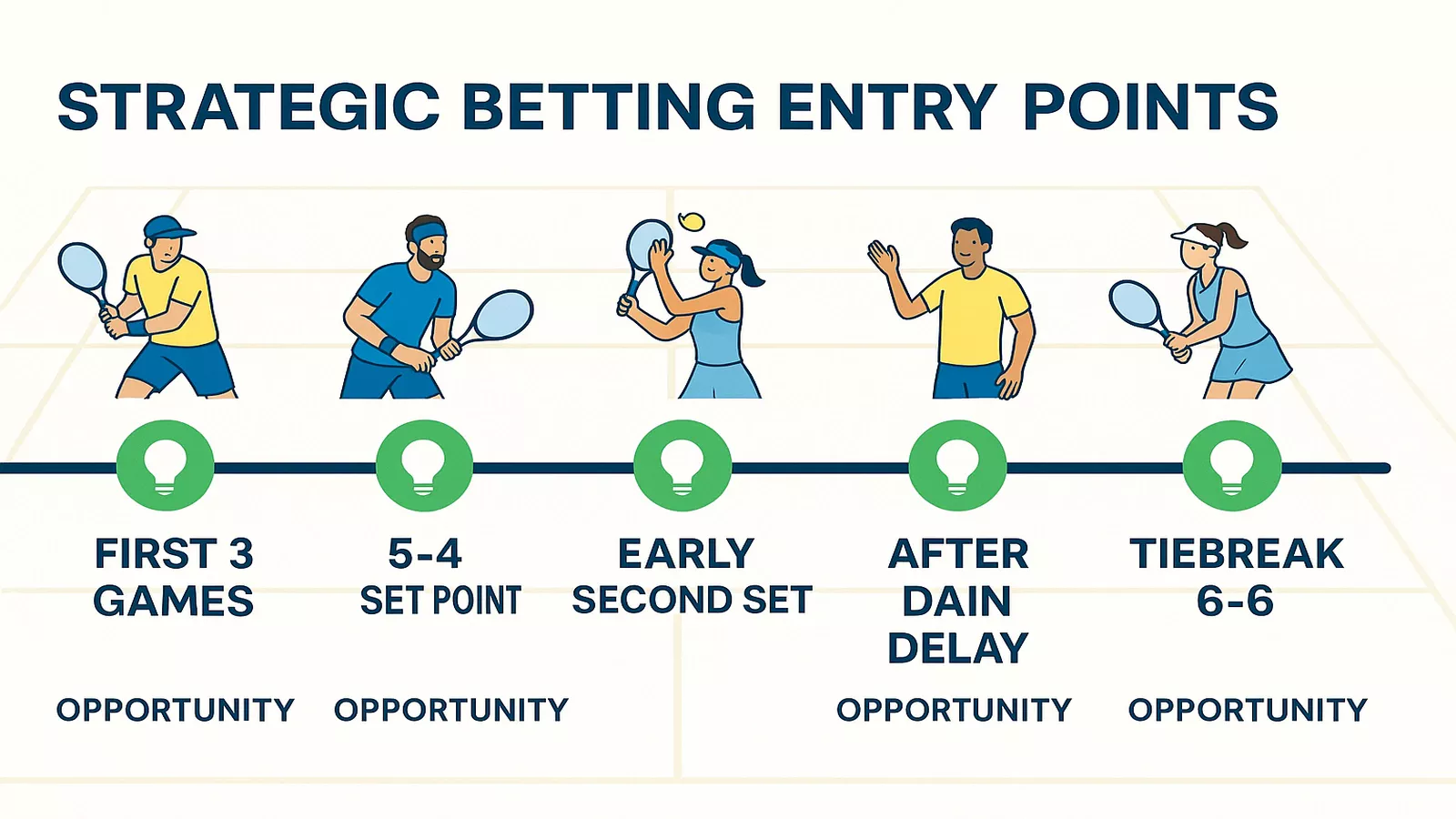
Knowing when to place live bets is as important as knowing what to bet. Tennis matches provide recurring situations where betting value consistently appears.
The first three games of any match offer unique betting opportunities. Players are still settling into the match, testing different tactics, and dealing with early nerves. Markets price based on pre-match analysis, but the actual on-court dynamic often differs from expectations. If a player everyone expected to dominate struggles in the opening games, their odds lengthen before they potentially settle down. That creates value for backing them at better prices than you’d get pre-match.
I look specifically for players who historically start matches slowly but improve as they find their rhythm. When these players fall behind early, recreational bettors panic and markets overreact. But if you’ve done your homework and know this player consistently recovers from slow starts, you can get tremendous value backing them at inflated odds.
End of set situations create consistent mispricings. When a set reaches 5-4, the player serving for the set faces enormous pressure. They might be favored to hold serve and win the set, but that pressure causes breaks more frequently than hold percentages suggest. The value is often on the player trying to break back, especially if they’ve shown life recently.
Similarly, tiebreak situations produce specific betting edges. Some players are statistically excellent in tiebreaks they raise their level, execute under pressure, and consistently win close sets. Others choke in tiebreaks despite strong overall games. When a strong tiebreak player gets to 6-6, their odds to win the set often don’t fully reflect their tiebreak excellence.
Early second set is prime betting territory, especially after lopsided first sets. A player who lost the first set badly often comes out firing in the second set they’re loosened up, playing more freely, and have nothing to lose. Meanwhile, the player who won the first set easily often relaxes slightly, satisfied with their lead. This dynamic frequently produces closer second sets or even second set victories for the player who lost the first set badly.
Markets tend to overprice the player who won the first set and underprice the player who lost it. The momentum narrative dominates “they’re in control” or “they’re playing great.” But regression to the mean suggests extreme first set results rarely repeat immediately. Betting on that regression creates value.
Momentum shift recognition after extended exchanges is crucial. When a player saves multiple set points, wins a grueling game after several deuces, or successfully converts a clutch break point, momentum legitimately shifts. Their confidence spikes, their opponent’s deflates, and the next several games often reflect that shift. Betting immediately after these pivotal moments, before markets fully adjust, captures value.
The key is distinguishing genuine momentum shifts from random variance. Not every saved break point represents a meaningful shift. But when a player saves three or four break points in succession, especially in critical game situations, something changed. Maybe they elevated their serve, maybe their opponent tensed up, but the shift is real and predictive.
Weather delays create fascinating betting opportunities. After rain delays or suspensions, matches resume with completely different dynamics. Players who were struggling before the break sometimes come back refreshed and refocused. Players who were dominating sometimes return cold and unable to recapture their rhythm. The break resets the match psychologically, but markets often assume play will continue where it left off.
I pay special attention to which player requested or benefited from the delay. If a struggling player seemed relieved when rain came, they probably needed the break desperately. When play resumes, they’ll likely perform better than pre-delay form suggested. If the dominant player seemed frustrated by the delay, that frustration might carry over and affect their play.
Physical Condition Assessment During Play
Fatigue, injury, and physical decline happen gradually, then suddenly. Learning to spot these transitions before they’re obvious gives you massive betting edges.
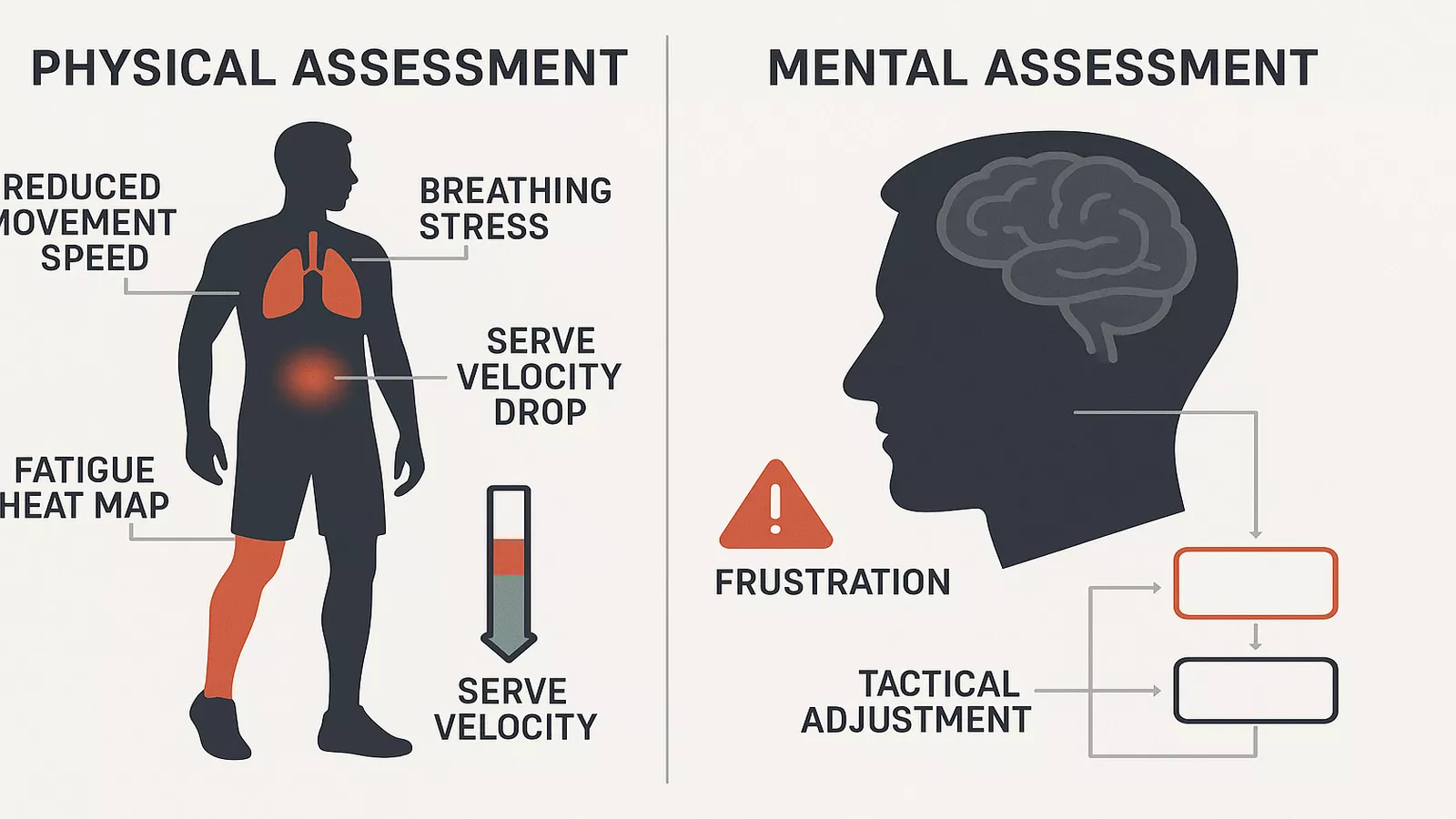
Movement quality degradation appears before most bettors notice. A player covering the court well early might slowly lose a step. Their split-step timing gets slightly off, their first step slows, their court coverage shrinks. The casual observer doesn’t notice for another three or four games. But if you’re watching specifically for movement changes, you’ll spot declining mobility early and can bet against them before markets adjust.
I watch movement specifically between points, not just during points. Players jogging back to position slowly, taking longer recovery periods, or showing less spring in their step these are signs of accumulating fatigue that predict future problems. When you notice movement decline before it affects the score, you can bet with several games of lead time.
Serve velocity drops are quantifiable indicators of physical decline. When a player serving 120 mph first serves drops to 110 mph, something’s wrong fatigue, injury, or lost rhythm. Reduced serve speed means fewer free points, more returnable serves, longer service games, and increased break vulnerability. TV broadcasts sometimes show serve speeds, giving you hard data about physical decline.
Even without velocity numbers, you can spot serve decline through ball trajectory and placement. Serves floating higher over the net, landing shorter in the service box, or missing target spots these visual cues indicate physical issues even before velocity numbers confirm it.
Breathing patterns reveal physical state. Players breathing heavily between points, bending over to recover, or taking maximum time between serves are physically taxed. As matches progress, this fatigue compounds. A player showing breathing distress in the second set will likely struggle more in the third set, especially in hot conditions. Betting against them before that third set struggle manifests creates value.
Injury development is the live bettor’s nightmare and opportunity. When a player shows clear injury signs limping, grimacing, stretching a muscle repeatedly, calling for trainer their ability to compete is compromised. The challenge is assessing severity. Is this a minor issue they’ll play through, or something that will worsen and force retirement? Getting this assessment right means the difference between profitable bets and disasters.
I’ve learned that players continuing to play after trainer visits usually have enough left to compete, though often at reduced effectiveness. The retirement risk is highest when injuries appear suddenly and players immediately call trainers. Gradual injury development that gets treated mid-match usually means the player plans to finish, creating betting opportunities on their opponent.
Medical timeout timing matters significantly. A player taking a timeout while ahead is genuinely injured. A player taking a timeout while behind might be buying time to reset mentally as much as treating injury. The first scenario is more concerning for betting purposes players don’t interrupt their own momentum unless something’s seriously wrong.
Mental State Evaluation and Psychological Reading
Physical condition gets attention, but mental state drives outcomes just as powerfully in tennis. Reading psychological shifts separates elite live bettors from average ones.
Frustration cascades are predictable and bettable. When a player smashes a racquet, argues with the umpire, or shows visible fury, they’re entering a mental spiral. The immediate next game or two typically show continued poor performance they’re still angry, still unfocused, still making emotional rather than tactical decisions. This creates betting opportunities on their opponent for the next few games until they either regain composure or completely melt down.
The key is distinguishing between brief emotional release and genuine mental collapse. Some players smash a racquet, vent their frustration, then immediately refocus and play better. Others spiral for the rest of the set. Knowing individual player patterns determines whether frustration moments create betting opportunities.
Confidence shifts show in serving patterns. A player with surging confidence hits bigger first serves, goes for more aggressive placements, and takes more risks. A player with declining confidence serves more conservatively, aims for safer targets, and becomes passive. These serving pattern changes predict future performance before scores reflect the confidence shift.
When I notice a player who was serving aggressively suddenly pushing conservative serves into play, I know their confidence dropped. The next service game will likely be even more tentative. The game after that might see them broken. Betting on this trajectory before it fully plays out captures value markets miss until the break actually happens.
Crowd effects vary by player. Some players thrive on hostile crowds they channel negative energy into motivation. Others wilt under crowd pressure. Home court advantage isn’t uniform it helps players who feed off energy and hurts players who need quiet focus. When you’ve identified which type each player is, crowd reactions during the match create betting opportunities.
In Davis Cup or similar team events, crowd intensity amplifies these effects. A player who struggles with crowd pressure facing a hostile home crowd is severely disadvantaged in ways their odds might not fully reflect. Conversely, a player elevated by crowd support might outperform their ranking in front of home fans.
Tactical adjustment recognition separates amateur match watching from professional analysis. When one player changes their tactics starting to serve wider, approaching the net more frequently, targeting the opponent’s weaker side more consistently they’re making adjustments. If those adjustments work, they’ll continue and likely produce improved results. If they fail, frustration follows and creates betting opportunities on their opponent.
I watch for adjustment attempts around the middle of sets. Coaches can communicate during changeovers, suggesting tactical changes. When a player emerges from a changeover and immediately implements new tactics, their coach identified something. Assessing whether that adjustment succeeds or fails helps predict the next several games.
Risk Management and Position Sizing in Live Betting
The speed and emotional intensity of live betting demands rigorous risk management. Even experienced bettors make costly mistakes when adrenaline is pumping and they’re trying to bet between points.
Position sizing should be smaller for live bets than pre-match bets. Live betting involves more uncertainty you’re reacting to rapidly changing situations with less time for thorough analysis. The increased uncertainty justifies reduced position sizes compared to methodical pre-match analysis where you’ve had hours to consider all factors.
I typically bet 30-50% of my normal unit size on live bets unless I have exceptionally high confidence. This reduced sizing protects against the inevitable mistakes that come from quick decision-making under pressure. The edge in live betting often comes from making five or six small value bets during a match rather than one large bet.
Cash-out decisions require pre-defined rules. Most betting platforms offer cash-out options that let you close positions before matches end. This feature is both powerful and dangerous. It’s powerful when used to lock in profit after odds swung dramatically in your favor. It’s dangerous when used emotionally to prevent small losses from becoming large ones, cutting off bets that would have ultimately won.
I establish cash-out rules before matches start. If I’m ahead by more than half my potential profit, I’ll consider cashing out if the remaining risk seems high. But I never cash out when I’m behind unless a genuine injury or other dramatic development makes my original thesis completely invalid. Emotional cash-outs to avoid losses are almost always mistakes.
Hedging during live play creates risk management opportunities that don’t exist pre-match. If you backed a player pre-match and they race to a big lead, you can hedge by backing their opponent at long odds. Depending on the odds movement, you might guarantee profit regardless of final outcome. This requires quick math and decisiveness, but it’s how professional live bettors manage risk dynamically.
The key is not hedging reflexively anytime odds move favorably. Small favorable movements aren’t worth hedging you’re just reducing profit. But dramatic odds swings that let you lock in 70-80% of maximum profit while eliminating risk? Those are worth hedging, especially in volatile matches where momentum could shift back quickly.
Maximum betting frequency limits prevent overtrading. In live betting, opportunities seem constant every game presents potential bets. But most of those opportunities are marginal or illusory. Betting too frequently means betting spots without clear edge, which destroys profitability. I limit myself to three or four live bets per match unless it’s an unusually volatile match with repeatedly clear value appearing.
This discipline is hard to maintain. When you’re watching intently and money is involved, the temptation to bet constantly is powerful. But winners bet selectively, only when clear edges exist. The discipline to watch without betting when conditions don’t warrant action separates profitable live bettors from losers.
Technology, Tools and Execution
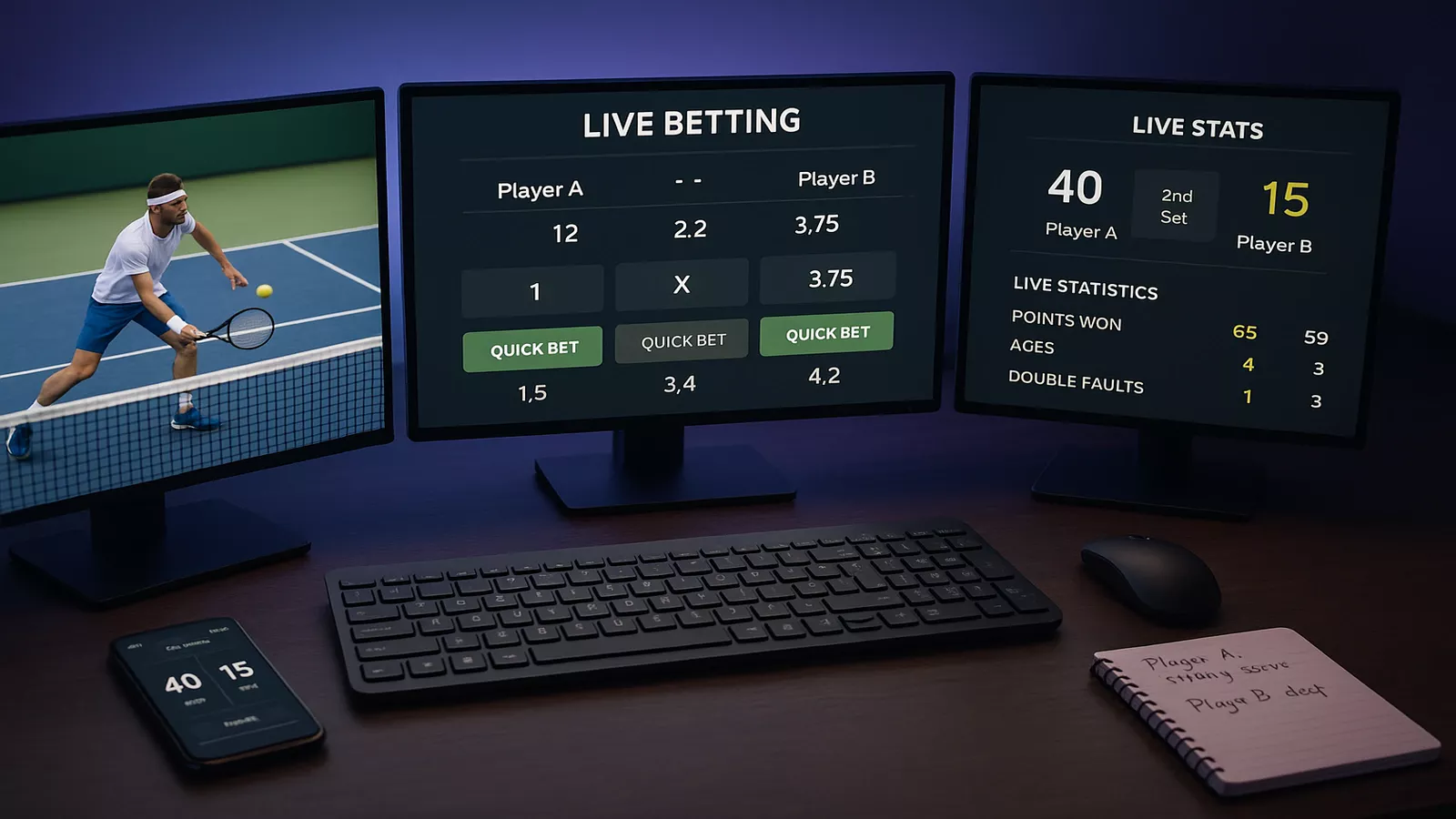
The technical infrastructure required for successful live betting extends beyond just having an account at a bookmaker.
Stream delay management is critical. Most tennis streams lag 20-45 seconds behind real time. That delay means by the time you see something on stream, betting markets already reacted. Betting based on delayed information puts you at severe disadvantage you’re betting on old information that markets already priced in.
The solution is using multiple information sources. Radio coverage runs closer to real time than video streams. Live scoring apps update faster than video streams. Some bettors even attend matches in person to eliminate lag entirely. The edge in live betting comes partly from accessing information faster than other bettors, and managing stream delay is fundamental to that edge.
Platform selection matters more for live betting than pre-match betting. You need platforms with fast odds updates, reliable interface responsiveness, and quick bet acceptance. Platforms that lag, freeze, or reject bets frequently are unusable for serious live betting. The best live betting platforms update odds in real time, accept bets instantly, and provide intuitive interfaces that let you place bets in seconds.
I maintain accounts at two or three platforms simultaneously during live betting. If one platform’s odds are stale or their interface is lagging, I switch immediately to an alternative. Having backup options prevents missing opportunities due to technical issues.
Multi-screen setups optimize live betting execution. I use one screen for the match stream, one for live betting platforms, and one for live statistics and scoring. This setup lets me monitor the match, track relevant statistics, and execute bets without switching between windows or missing action. Professional live bettors treat this as their trading desk multiple information sources visible simultaneously.
For casual bettors, a two-screen setup is sufficient match on one screen, betting platform and statistics on another. Even this basic multi-screen approach dramatically improves execution compared to constantly switching between stream and betting tabs.
Quick bet entry techniques reduce execution lag. Fumbling with betting interfaces while odds are moving costs money. I pre-configure common bet amounts, keep betting interfaces open and ready, and practice quick bet entry until it’s automatic. The difference between placing a bet in three seconds versus ten seconds can mean the difference between getting favorable odds and missing the opportunity entirely.
Keyboard shortcuts, one-click betting options, and memorized navigation paths all contribute to execution speed. This might seem excessive, but in live betting, milliseconds matter. When you’ve identified value, you need to execute before that value disappears.
Live betting transforms tennis from an analytical exercise into a real-time battle requiring quick thinking, emotional control, and decisive action. The skills required differ fundamentally from pre-match betting you’re not trying to predict everything that might happen, you’re responding to what is happening and identifying when markets are mispricing those developments.
The best live bettors combine preparation with adaptability. They’ve done enough homework to recognize patterns instantly, but they remain flexible enough to adjust when matches develop unexpectedly. They trust their read of momentum and physical condition but verify with statistical evidence before committing. They act decisively when opportunities appear but have the discipline to watch without betting when conditions don’t justify action.
Master these skills and live betting becomes not just profitable but genuinely engaging. You’re participating in matches as they unfold, testing your reads against market consensus in real time, and seeing immediate results. The feedback loop is intense, the learning curve is steep, but the edge is real for those willing to put in the work.
